
Beijing's Xiaomaibu
Demystifying Beijing one corner store at a time

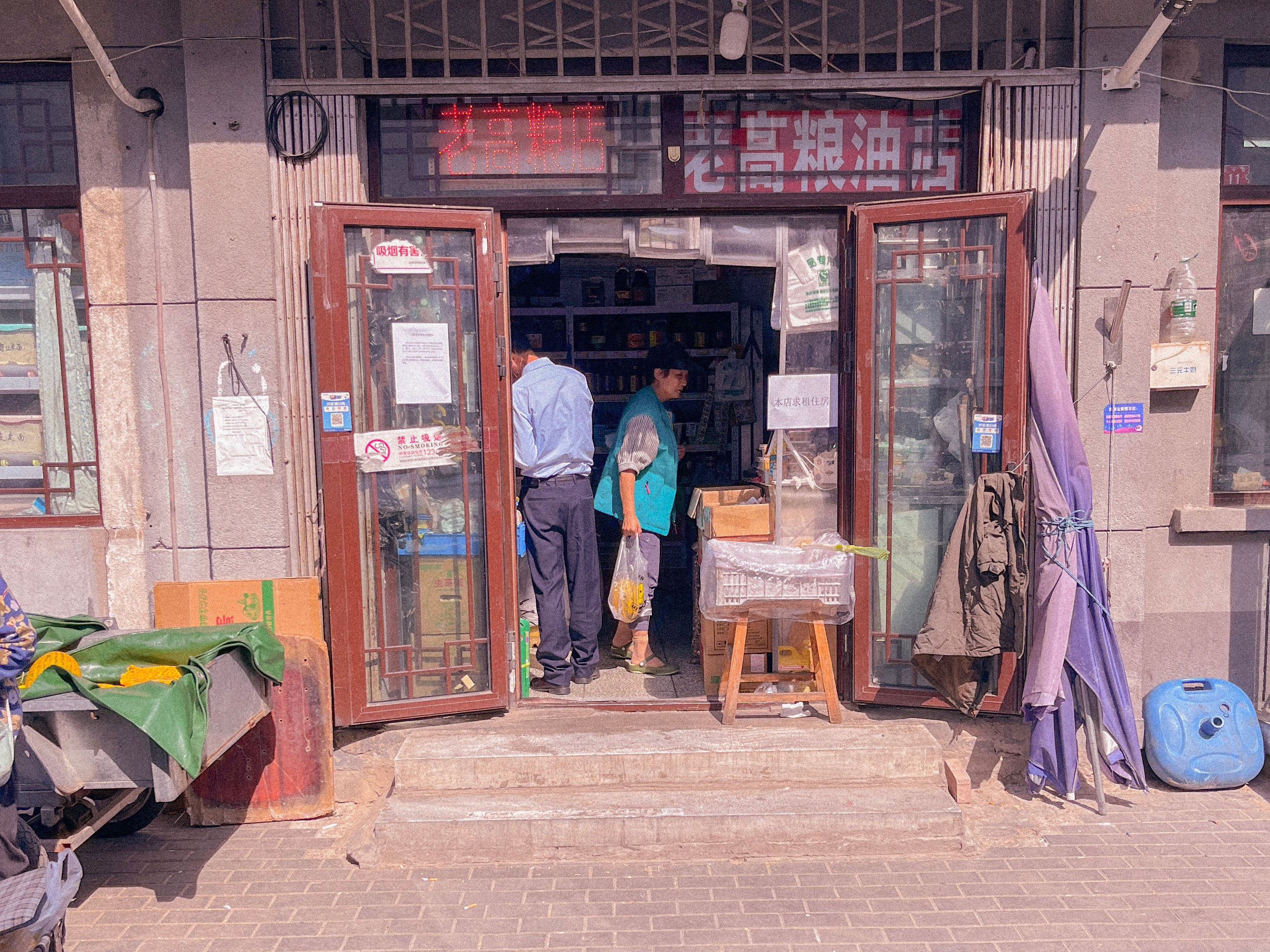
The photo has fascinated me ever since I took it. Not because it’s particularly great. In fact, the composition is imperfect—I missed the moment the patrons stepped into the harsh, dusty early fall sun—but the imperfection is the point. It captures the day to day rythm of Beijing’s hutongs.
Two shoppers pick over the goods on offer. One holds clear plastic bags filled with the day’s items; the other is dressed in a loose-fitting baby blue button-up and navy slacks. Metal shelving is filled with canned goods and sauces just two or three deep. Cardboard boxes, stacked two-high, serve as display cases like some Chinese version of Costco. Above them, an LED display sign burned in bright red Mandarin characters.
The xiaomaibu1 was smaller than the country store near my farmhouse in rural Kentucky, but the spirit was identical. It was a tiny beacon for the folks in the surrounding area, providing an immediate lifeline and a place for social connectivity.
This scene, more than any other, became the symbol of authentic Beijing for me. It launched my desire to capture the mundane, day-to-day stuff that I saw. I hoped to demystify life in the Chinese capital for the folks who will never go. I did it less than I wanted in the two years I was there, but I suppose that’s the nature of time—there’s never enough of it.
I took the photo while on a breakfast food tour in the Baitasi hutong in western Beijing. Baitasi literally means White Pagoda. The giant white stupa looms over the entire area, and the series of alleyways around it has taken on its name.
While the wet markets and street vendors associated with pre-COVID China may have been swept up in the capital’s sanitation efforts, these small neighborhood shops have remained. You can find them anywhere in the city, every few blocks. They cater to the locals, selling everyday items–beer, cigarettes, dry goods, drinks, and snacks.


As with last week’s photo, I started looking for these stores everywhere and the activity that inevitably popped up around th1em. The one across from our building was fascinating. They were always tickled when I walked in speaking my broken Mandarin, asking for ‘liang bei bing pijiu’ (two cold beers). They usually talked me into buying four. How could I say no to the cut-rate price of four big bottles of locally made lager—actually quite good—for four dollars? Or the shop a few blocks away, where the owner just typed the price into my WePay app instead of entertaining my fumbling with numbers in the lingua franca.
If I’m honest, I miss this part of Beijing. I can do without the hustle and bustle of Sanlitun, though it certainly provided some entertainment. But it’s these places selling local goods to local people that most captured my attention.
If I’m fortunate enough to return one day, I hope the hutongs will still be there, ticking over with the same obstinate resilience despite the gentrification of the surrounding spaces.
Finding a slice of rural Kentucky in a Beijing alleyway was a surreal moment for me.
Have you ever traveled somewhere far away and found a surprising reminder of home?
I’d love to hear your stories below.
xiaomaibu are independently run corner stores that are ubiqutous across Beijing. You can find them in apartment buildings, in the hutongs, and smashed in any tiny space they can find. (yes, I forgot the tone signs.)
The parallel you draw between Beijing's xiaomaibu and rural Kentucky country stores captures something universal about these neighborhood anchors. What strikes me about the Baitasi area is how it preserves that social connectivity despite rapid urban development—the White Pagoda standing as both historical landmark and gathering point for everyday commerce. Your documentation of these spaces feels increasingly important as modernization sweeps through Chinese cities.